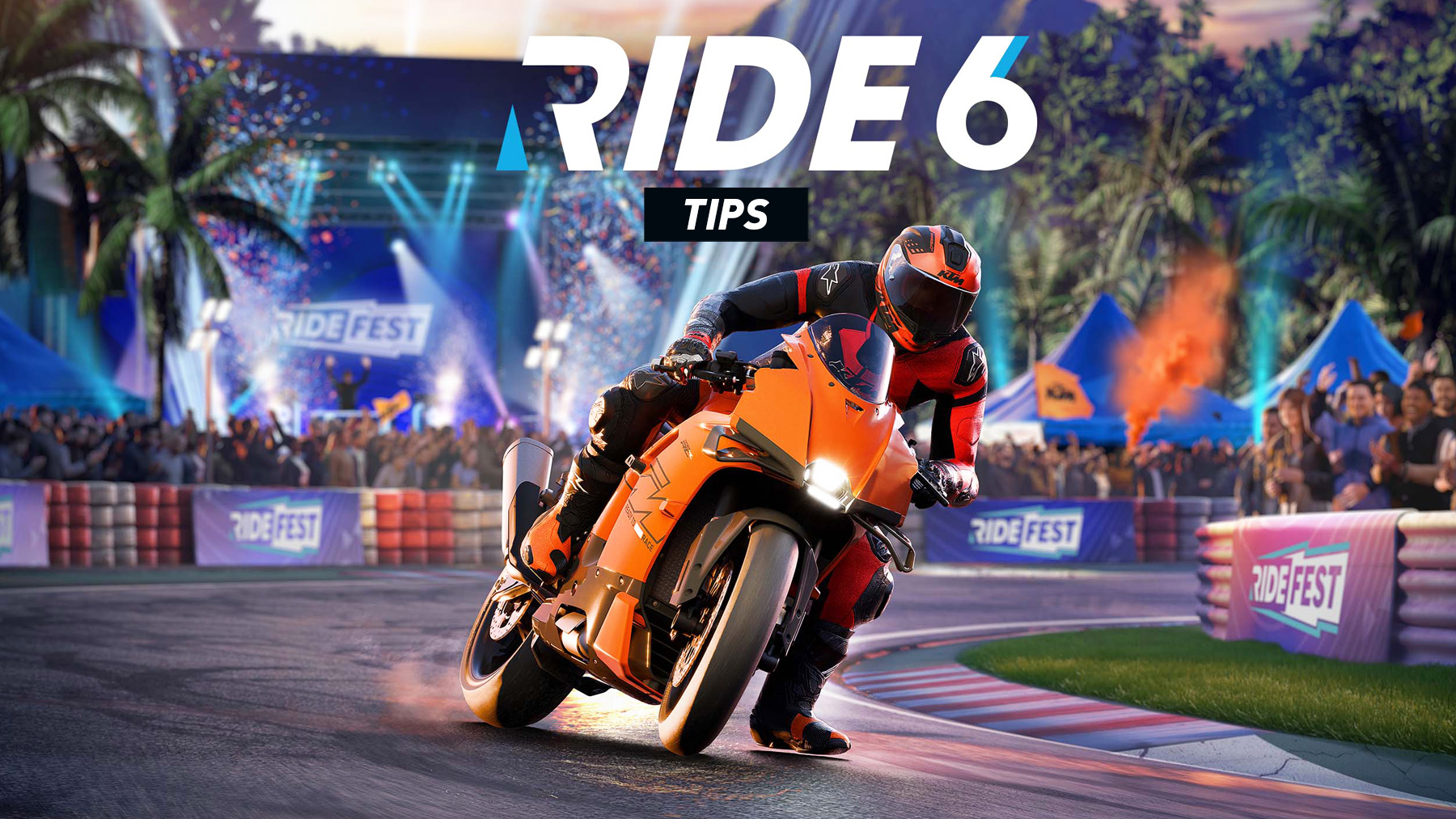
RIDE 6 is not only about going fast on the straights. The biggest improvements come from braking earlier, leaning smoothly, controlling throttle on corner exit, and choosing bikes that match your skill level. These tips will help beginners survive their first races and help experienced players become more consistent.
Do Not Ride It Like A Car Game
Motorcycles need earlier turning inputs than cars. You are not simply steering wheels left and right; you are shifting the bike into a lean. Start preparing for corners earlier than you think, especially on heavier and faster bikes.
Brake Before You Lean
The safest way to enter most corners is to brake hard while the bike is upright, then release pressure as you lean in. If you keep too much front brake while turning, the bike can run wide, lose grip, or feel unstable.
Use The Front Brake As Your Main Brake
The front brake gives most of your stopping power. Use it before corners, but avoid treating it like an on/off button. Smooth pressure is better than sudden braking, especially when riding powerful bikes.
Use The Rear Brake For Small Corrections
The rear brake is useful when you are slightly wide or need to tighten your line mid-corner. Tap it gently instead of holding it down. It should help control the bike, not replace proper braking.
Be Smooth With The Throttle
Opening the throttle too aggressively while leaned over can cause instability or wheelspin. Roll on the throttle gradually as the bike stands up, then accelerate harder once you are pointed toward the exit.
Learn One Track At A Time
Track knowledge matters more than raw speed. Learn braking boards, corner shapes, elevation changes, and exit curbs. Once you know where to brake and where to turn in, lap times improve quickly.
Use Rewind As A Practice Tool
Rewind is not only for fixing crashes. Use it to repeat difficult corners, compare braking points, and learn how different lines affect your exit speed.
Start With Easier Bikes
Do not jump straight into the most powerful superbikes. Lower-powered or mid-range bikes are easier to control, teach better cornering habits, and let you focus on clean racing lines.
Adjust Assists Gradually
Riding aids can help you learn, but turning everything off too early can make the game frustrating. Reduce assists step by step as your braking, throttle control, and cornering become more consistent.
Use The Ideal Trajectory At First
The racing line is helpful while learning braking zones and corner flow. Once you know the track, try reducing or disabling it so you can judge corners naturally.
Do Not Chase Maximum Speed Everywhere
A clean exit is often more important than a fast entry. If you enter too hot, you lose time correcting the bike. Slow in, smooth through, and fast out is usually the better approach.
Respect Wet Conditions
Rain and damp tracks require earlier braking, softer throttle, and smoother steering. Avoid aggressive lean angles and be careful on painted lines, curbs, and exits.
Use Manual Transmission When Ready
Manual gears can improve control because you decide when to upshift, downshift, and manage engine braking. Start with automatic if needed, then switch to manual once you are comfortable with racing lines.
Do Not Overuse Curbs
Curbs can help with racing lines, but using too much curb can unsettle the bike. Touch them carefully, especially while braking, accelerating, or leaning heavily.
Watch Your Exit Speed
The best riders are fast because they exit corners cleanly. A slightly slower entry with a better exit can gain more time than a risky late-brake move that ruins your acceleration.
Practice Trail Braking Carefully
Trail braking can make you faster, but it requires control. Begin braking upright, then slowly reduce brake pressure as you lean. Do not hold full brake deep into the corner.
Upgrade With A Purpose
Do not upgrade only for top speed. Better handling, braking, acceleration, and stability can matter more depending on the track. Tight circuits often reward control more than raw horsepower.
Be Patient With Powerful Bikes
Fast bikes punish rough inputs. If a bike feels impossible to control, lower the assists gradually, practice on easier tracks, or return to a more forgiving class until your technique improves.
Focus On Consistency Before Lap Records
One perfect lap does not matter if the next three end in crashes. Aim for clean, repeatable laps first. Once you can stay consistent, start pushing braking points and corner speed.
See also Controls and Buttons for RIDE 6
Comments
No comments yet. Be the first to share your thoughts!