Escape from Ever After may dress its battles in cardboard scenery, office jokes and storybook charm, but its combat expects more than selecting the strongest-looking attack. Success depends on understanding enemy patterns, executing action commands, choosing partners intelligently and building a badge setup that solves the problem in front of you.
The adventure also rewards curiosity. Storybook worlds contain side quests, treasures, unusual NPCs and routes that are easy to miss when you follow only the main objective. Partner abilities add another layer by turning previously ordinary scenery into possible shortcuts or secrets.
This guide covers early-game priorities, timed attacks, defensive inputs, partner tactics, badge management, healing, exploration, boss preparation, office progression and the most common mistakes new employees make while attempting to overthrow Ever After Inc.
Essential Escape from Ever After Tips
- Practise every new action command against an ordinary enemy before relying on it in a boss fight.
- Watch the attack animation rather than pressing as soon as a prompt appears.
- Defend during every enemy turn, even when the remaining damage looks harmless.
- Switch partners according to the encounter instead of using one companion for everything.
- Read complete badge descriptions before equipping them.
- Build around a clear purpose instead of equipping unrelated bonuses.
- Save healing items when a timed block can safely prevent the damage.
- Attack suspicious scenery and inspect routes hidden behind foreground objects.
- Speak to office coworkers again after completing major story sections.
- Return to earlier locations after gaining a new partner ability.
- Complete side quests before leaving a storybook world permanently.
- Keep a flexible item supply rather than filling every slot with healing.
Learn the Action Command Before Judging the Attack
A skill's listed power is only part of its real value. Many attacks become significantly stronger when their action command is completed correctly.
When unlocking a new move:
- Use it against a low-risk enemy.
- Watch the entire animation once.
- Identify the visual moment of contact.
- Listen for an audio cue.
- Test whether the input must be tapped, held or repeated.
- Compare a successful attempt with a missed one.
Do Not Practise During a Critical Fight
A boss is the worst place to discover that an action command occurs much later than expected. Learn the timing during routine encounters.
Some Moves Reward Rhythm Rather Than Reflex
Repeated-hit skills may follow a musical or animation rhythm. Count the beats instead of reacting independently to every icon.
Watch the Character, Not Only the Prompt
The prompt tells you which input is required, but the animation often reveals when it should be pressed.
Useful timing landmarks include:
- Flynt's weapon reaching the enemy.
- A partner completing a wind-up.
- A projectile returning or striking its target.
- A character landing after a jump.
- A sound effect immediately before impact.
Avoid Early Inputs
Many action commands punish pressing at the start of the animation. Wait for the move to approach its decisive moment.
Use Peripheral Vision
Keep the prompt visible without staring at it exclusively. This makes it easier to connect the icon with the character animation.
Defensive Timing Saves More Than Health
A successful defensive action command does more than reduce immediate damage. It also preserves healing items, keeps low-health characters active and gives you more freedom during longer dungeons.
Study New Enemy Attacks
During the first encounter with a new enemy:
- Watch which party member it targets.
- Observe the complete wind-up.
- Look for a pause designed to trigger an early input.
- Press near the actual point of contact.
- Remember whether the attack contains multiple hits.
Multi-Hit Attacks Need Multiple Decisions
Do not relax after blocking the first hit. Some attacks require another input for each strike in the sequence.
Do Not Accept Cheap Damage
A few points lost in every ordinary fight eventually become an expensive item problem. Defend even when the party is currently healthy.
Use Basic Attacks Efficiently
Special skills are tempting, but ordinary attacks remain useful when their action commands are reliable.
Use a basic attack when:
- An enemy has very little health.
- You want to conserve a limited battle resource.
- The target does not require a special effect.
- You know the basic timing better than a new skill.
- A partner can finish another target separately.
Do Not Overspend to Finish a Weak Enemy
Using an expensive skill against an almost-defeated target may leave the party underpowered for the next wave.
Reliability Has Value
A modest move that you execute perfectly every time may outperform a stronger technique whose action command is frequently missed.
Focus Fire When an Enemy Is Dangerous
Dividing damage across every opponent leaves all of them able to act. Removing one dangerous enemy reduces the number of attacks the party must defend against next turn.
Prioritise enemies that:
- Heal or strengthen their allies.
- Use difficult multi-hit attacks.
- Apply disruptive status effects.
- Deal heavy damage to several party members.
- Are close enough to be defeated this turn.
Spread Damage Only for a Reason
Area attacks are worthwhile when several enemies can be weakened or defeated together. Do not use them merely because multiple targets are present.
Read Enemy Arrangement Before Choosing a Move
Target position may affect which skills can reach an enemy. Inspect the complete formation before spending a turn.
Ask:
- Can the chosen attack reach the target?
- Would another partner handle the position better?
- Can an area move hit several enemies?
- Is one target protecting or supporting another?
- Will the attack's secondary effect matter?
Do Not Repeat the Same Opening Automatically
An effective strategy against one group may be wasteful against another. Choose the opening turn after seeing the enemy composition.
Switch Partners to Solve the Current Problem
Partners provide different battle skills and field abilities. The best companion is the one whose tools match the encounter, not simply the one you like most.
Consider switching when:
- The enemy group has an awkward formation.
- You need healing, control or support.
- A target resists the current partner's best attack.
- You need a cheaper way to finish a weakened enemy.
- A boss phase demands a different tactic.
Review New Partner Skills Immediately
A newly unlocked technique may change what that partner is best at. Read its cost, target limitations and secondary effects before entering another major fight.
Keep More Than One Partner Battle-Ready
Do not invest all attention into a single companion setup. The game regularly changes its storybook rules and enemy designs, making flexibility valuable.
Use Partner Abilities Everywhere
Outside battle, partner abilities are keys disguised as character skills. They can interact with scenery that Flynt cannot affect alone.
Use them around:
- Unusual environmental objects.
- Blocked passages.
- Raised or distant platforms.
- Suspicious cracks and decorations.
- Areas where the camera reveals an unreachable reward.
- Locations visited before the partner joined.
Switch Partners Near Every Obvious Secret
When Flynt can see a treasure but cannot reach it, the level is often teaching you to use a companion rather than asking for a difficult jump.
Return to Old Areas
A new partner ability can transform an earlier dead end into a side quest, badge or hidden item.
Build Badges Around a Clear Job
Badges allow meaningful customisation, but equipping several unrelated effects can create a build that does nothing particularly well.
Useful build directions may include:
- Improving reliable basic attacks.
- Strengthening partner techniques.
- Increasing survivability.
- Supporting frequent item use.
- Improving resource efficiency.
- Creating a high-risk offensive setup.
Ask Whether the Badge Activates Often
A powerful effect with a very narrow condition may provide less value than a smaller bonus used during every battle.
Do Not Equip a Badge Only Because It Is New
Compare it with the current setup. A newly found badge may suit another partner combination or a later boss rather than the present area.
Change Badges Before Boss Encounters
Exploration builds and boss builds do not need to be identical.
Before a major battle, consider equipping effects that:
- Improve survival over several turns.
- Strengthen your most reliable attack.
- Reduce the cost of frequently used skills.
- Help against the boss's status effects.
- Reward successful defensive timing.
- Support the partner chosen for the encounter.
Remove Effects That Cannot Trigger
A badge designed for groups of weak enemies may contribute nothing against one large boss.
Save Before Rebuilding
When possible, make a save before changing several badges so the previous setup remains easy to restore.
Read the Full Information Panel
Use the Show Info command rather than relying on a short menu label.
The expanded description may clarify:
- Who the ability targets.
- Whether an effect applies immediately or later.
- The required resource cost.
- How long a bonus lasts.
- Whether the move affects bosses.
- What successful action-command timing changes.
Small Wording Differences Matter
“An enemy,” “all enemies” and “nearby enemies” can describe very different tactical value. Read carefully before committing to a build.
Carry a Balanced Item Supply
Healing is essential, but an inventory filled only with health recovery may leave you without answers to status effects or difficult formations.
A flexible supply should account for:
- Ordinary healing.
- Emergency recovery.
- Status removal where applicable.
- Offensive items.
- Battle resources.
- Unusual encounter mechanics.
Use Cheap Healing Between Major Threats
Do not spend the strongest recovery item to replace a small amount of health unless the party is about to enter a boss fight.
Items Are Meant to Be Used
Repeatedly losing a battle with a full inventory is less efficient than spending the item that solves the dangerous turn.
Heal Before Entering an Obvious Boss Room
Large doors, dramatic arenas and save points often signal an important encounter. Review health, items, badges and partner skills before crossing the threshold.
Do Not Enter with an Experimental Build
Return to abilities whose timing you know unless the new setup has already been tested against ordinary enemies.
Keep One Emergency Recovery Option
Avoid spending every powerful healing item during the opening phase. Bosses may introduce new attacks or additional targets later.
Treat Boss Fights as Timing Lessons
A boss is usually built around recognisable animations and changing patterns. The first attempt should teach you those patterns.
During the opening turns:
- Identify single-target and party-wide attacks.
- Watch for delayed impacts.
- Learn whether an attack strikes more than once.
- Test which partner skills remain effective.
- Observe phase changes.
- Avoid spending every item immediately.
Do Not Rush the Final Hit
A nearly defeated boss can still end the fight if you abandon defence. Continue using timed blocks until victory is confirmed.
Change Strategy Between Phases
When a boss summons help, changes position or adopts a new pattern, reassess the battle rather than repeating the previous turn automatically.
Explore Beyond the Main Objective
Each storybook world contains more than the direct route to the next corporate disaster.
Search for:
- Side quests.
- Treasure containers.
- Badges.
- Optional characters.
- Hidden paths.
- Environmental jokes and lore.
- Partner-specific obstacles.
Check Behind Foreground Scenery
The crafted visual style can conceal pathways behind trees, book pages, office partitions and building walls.
Walk Against Suspicious Edges
A path may curve behind scenery without being obvious from the default camera angle. Explore the outer boundary of each area.
Attack the Environment
Flynt's field attack is not only decorative. Use it on objects that appear unusually placed, cracked or visually distinct.
Good candidates include:
- Loose containers.
- Suspicious signs.
- Cracked scenery.
- Objects placed alone in a corner.
- Props blocking a narrow route.
Do Not Attack Only Once
Some objects may react after more than one hit or from a particular side. Reposition and try again when the design clearly suggests an interaction.
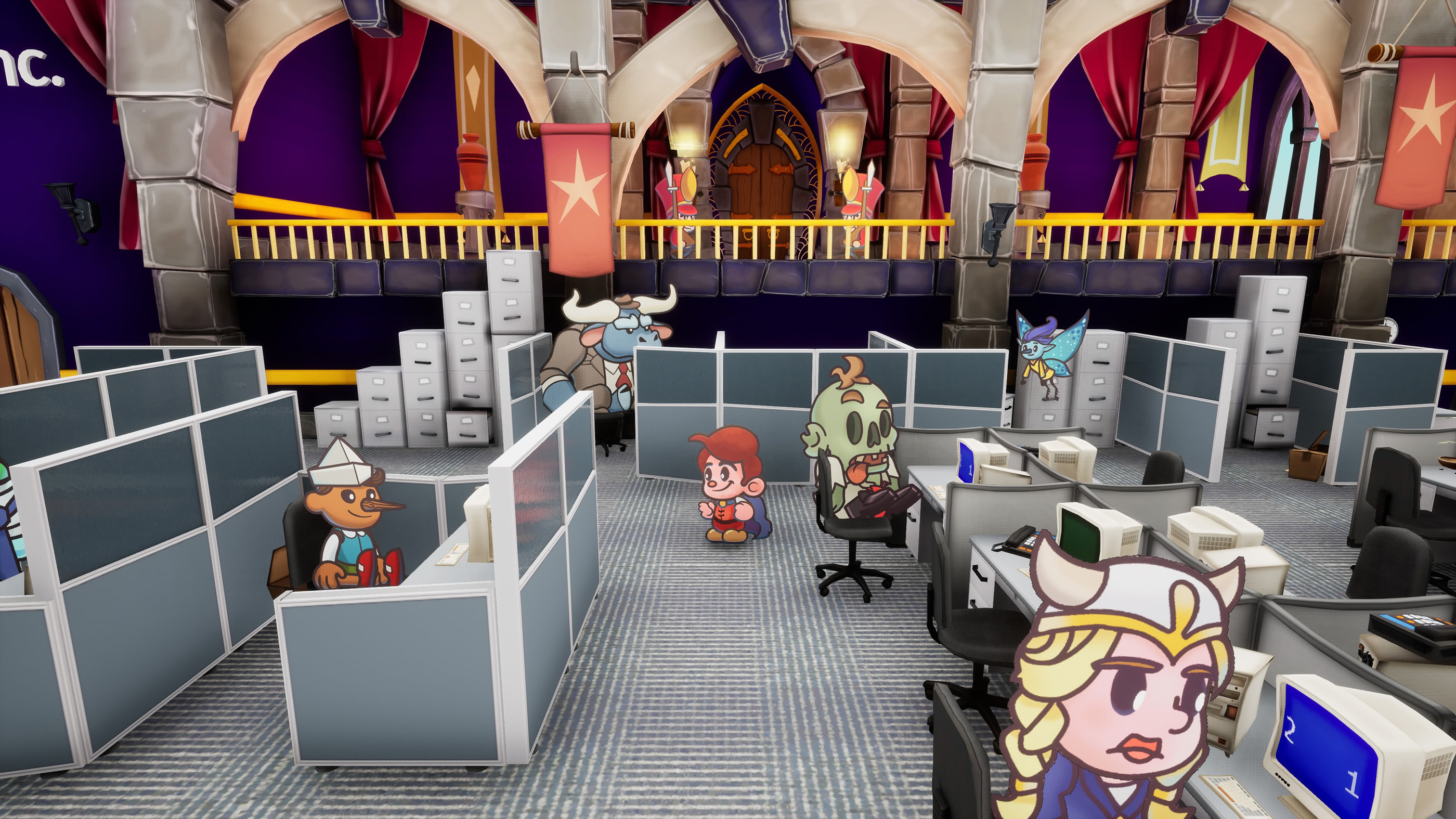
Talk to Everyone
The writing is a major part of the experience, but conversations also lead to useful rewards and side quests.
Speak with:
- Office coworkers.
- Characters near unusual scenery.
- NPCs standing away from the main route.
- People whose dialogue changes after a quest.
- Storybook residents after defeating a local threat.
Revisit Familiar NPCs
A character who had only a joke earlier may offer a new line, reward or task after the story advances.
Read Office Banter
The corporate hub reflects your progress. Returning between assignments adds context to the main story and may reveal additional activities.
Complete Side Quests Before Moving On
Side quests often lead through areas the main route does not require and may provide items, badges or additional character moments.
Finish Nearby Tasks Together
When several objectives occupy the same region, complete them in one exploration loop to reduce unnecessary backtracking.
Read the Quest Wording
A request may contain a location clue or identify which partner ability is needed.
Do Not Assume Every Quest Ends Where It Begins
Return to the original quest giver after collecting or completing the requested objective unless the game clearly marks the task as finished.
Decorate the Office as You Progress
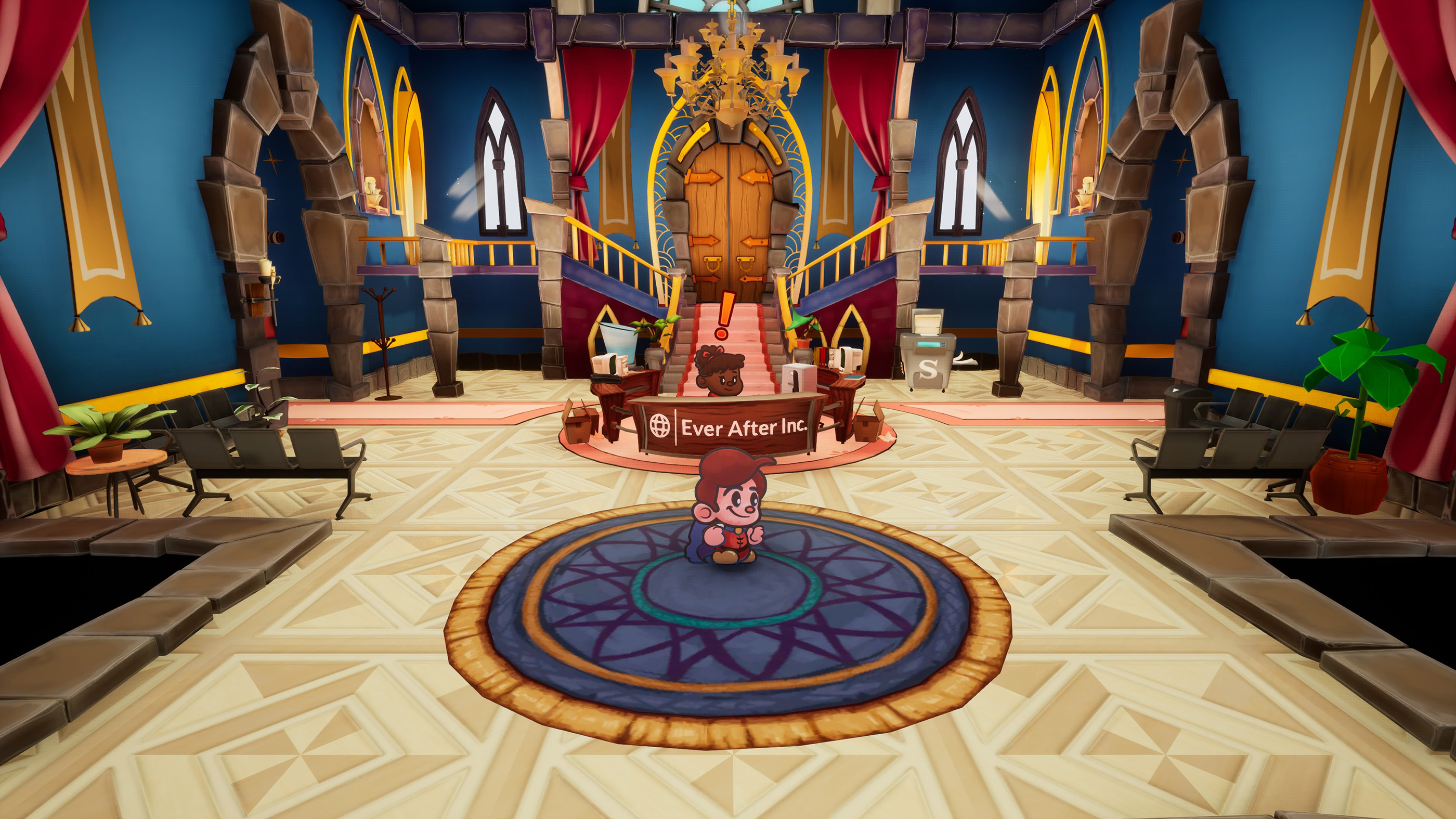
Office customisation is part of the game's climb through Ever After Inc. Treat new decorations as records of progress rather than merely background furniture.
Check New Options Regularly
Additional decorations and interactions may become available after story chapters, side quests or discoveries.
Use the Office as a Preparation Point
Before entering another storybook assignment:
- Review badges.
- Check partner upgrades.
- Restock useful items.
- Speak with coworkers.
- Inspect new office interactions.
Spend Upgrade Resources with a Plan
Characters and skills can be improved throughout the journey. Prioritise moves that already fit your reliable battle strategy.
A good early upgrade often:
- Strengthens an attack whose timing you consistently complete.
- Improves a partner used frequently in the current chapter.
- Reduces the resource pressure of long dungeons.
- Creates a useful option against groups.
- Adds survivability without requiring a rare condition.
Do Not Upgrade Only the Highest Damage Number
A cheaper utility skill may save more health and turns than another offensive move.
Keep the Party Flexible
The rules and themes change between storybook worlds. Avoid specialising so narrowly that one enemy type makes the entire build ineffective.
Use Status and Utility Effects Intelligently
An attack that controls an enemy or improves the party may outperform direct damage during a difficult encounter.
Utility is especially valuable when:
- A strong enemy needs to be delayed.
- A partner requires setup for a powerful move.
- The party needs another turn to heal.
- Several enemies are preparing attacks.
- A boss's defence must be weakened.
Check Boss Resistance
Not every control effect will work equally against major enemies. Read battle feedback and change tactics when a status repeatedly fails.
Plan Each Turn as a Complete Team Action
Do not choose Flynt's move without considering what the partner will do next.
A strong turn may involve:
- Flynt weakening a target for the partner.
- The partner applying an effect before Flynt attacks.
- One character finishing a weak enemy while the other controls a dangerous one.
- Using an item so the partner can attack safely.
Order Matters
A defence reduction applied after the main attack does not help that attack. Use support and setup actions before the move intended to exploit them.
Avoid Duplicate Jobs
When one character can finish the target, use the other to prepare for the next enemy rather than wasting both actions.
Adapt to Storybook Rule Changes
The game's worlds deliberately change genre, tone and encounter logic. Do not assume the lesson from one chapter solves the next one unchanged.
When entering a new story:
- Test environmental interactions.
- Speak to nearby characters.
- Inspect the new enemy timing.
- Check whether the current partner is still ideal.
- Search for a chapter-specific mechanic.
Let the Area Teach You
Early encounters in a chapter often introduce the mechanic required for its later boss. Pay attention before the stakes increase.
Save Before Major Decisions and Encounters
Use available save opportunities before:
- Entering a boss arena.
- Spending several upgrade resources.
- Changing a complete badge build.
- Leaving a storybook region.
- Attempting an unusual side route.
Confirm the Save Completed
Do not immediately close the game or system while a save indicator is active.
Adjust the Controls for Reliable Timing
Action commands should feel natural under your thumb. A binding that is comfortable for menus may be awkward during rapid battle prompts.
Test Changes in a Simple Encounter
After remapping:
- Perform a basic attack.
- Use a partner ability.
- Complete a timed defence.
- Navigate the badge menu.
- Confirm that Back and Attack remain distinct by context.
Reset When the Layout Becomes Confusing
The Controls page includes a Reset Controls command that restores the standard setup.
Common Beginner Mistakes
Pressing the Action Command Too Early
Wait for the attack's actual impact rather than reacting to the beginning of the animation.
Ignoring Defensive Inputs
Small amounts of avoidable damage accumulate across a dungeon.
Using the Same Partner Everywhere
Different companions solve different battle formations and environmental obstacles.
Equipping Every New Badge Immediately
A new effect is not automatically better than one supporting your current build.
Spending Expensive Skills on Weak Targets
Use reliable basic attacks to conserve resources.
Following Only the Objective Marker
Side routes contain quests, treasure, badges and hidden interactions.
Forgetting to Revisit the Office
Coworkers, decorations and conversations change as the corporate rebellion progresses.
Ignoring Field Attacks
Suspicious scenery may react when struck.
Leaving Without Finishing Side Quests
Complete nearby optional tasks before advancing beyond an obvious chapter transition.
Using Items Only After the Situation Is Hopeless
An item used one turn earlier may prevent a party member from being defeated.
A Reliable Battle Routine
- Inspect the enemy formation.
- Identify healers, support units and high-damage threats.
- Choose the partner whose skills fit the encounter.
- Check whether a setup effect should be used first.
- Focus damage on one priority target.
- Perform every offensive action command carefully.
- Watch the enemy animation during its turn.
- Use the defensive input at the moment of impact.
- Reassess health, resources and enemy positions.
- Change partners or items when the original plan stops working.
A Reliable Exploration Routine
- Speak to every nearby character.
- Walk around the outer edge of the area.
- Check paths hidden behind foreground scenery.
- Attack suspicious environmental objects.
- Switch partners near unusual obstacles.
- Search raised platforms and side rooms.
- Review the quest list before leaving.
- Return after unlocking another partner ability.
Frequently Asked Questions
Is Escape from Ever After turn-based?
Yes. Battles use turn-based commands combined with real-time timing inputs for attacks and defence.
How important are timed attacks?
Very important. Successful action commands can improve the damage or effects of many attacks.
How do you block enemy attacks?
Watch the enemy animation and press the displayed defensive input shortly before impact.
Should I use basic attacks?
Yes. They are useful for conserving resources and finishing weakened enemies, especially when you know their timing well.
Which partner is best?
No partner is ideal for every situation. Choose according to the enemy formation, required support and nearby environmental obstacle.
What do badges do?
Badges customise the party with passive effects and tactical bonuses. Read their full descriptions and combine effects that support the same strategy.
Should I equip every badge I find?
No. Equip badges that activate frequently and contribute to the current build or upcoming encounter.
When should I use healing items?
Use them before an enemy can defeat a party member. Do not wait until recovery is no longer possible.
Are there hidden areas?
Yes. Explore behind scenery, attack suspicious objects and use partner abilities near unusual environmental features.
Should I complete side quests?
Yes. Side quests provide additional stories, exploration and potentially useful rewards.
Can I return to earlier areas?
Revisit accessible locations after gaining new partners because their field abilities may open previously blocked routes.
How should I prepare for a boss?
Heal the party, review badges, stock useful items, equip the appropriate partner and practise the timing of the attacks you intend to use.
Why does my strong skill deal disappointing damage?
You may be missing its action command. Practise the move and compare successful and unsuccessful timing.
How do I handle groups?
Use area attacks when they provide meaningful value, or focus on removing the most dangerous enemy to reduce the number of incoming actions.
Should I save upgrade resources?
Keep some flexibility, but do not hoard everything. Improve reliable skills that support your regular strategy.
Is office decoration useful?
It is part of progression and personalisation, and revisiting the office also provides changing conversations and story details.
Does controller choice affect action commands?
Any responsive controller can work well. On PC, a wired PlayStation controller may provide more reliable compatibility than Bluetooth.
What is the best beginner badge strategy?
Use simple effects that activate often, improve survivability or strengthen an attack whose action command you can perform consistently.
What is the best overall beginner tip?
Do not rush the timed inputs. Watch each animation, learn the moment of impact and treat reliable execution as part of the character build.
Final Tips
The best employees in Escape from Ever After are not the ones with the flashiest skills. They are the ones who understand exactly when to press the button, which partner solves the current problem and which badge actually contributes to the plan.
Take ordinary battles seriously enough to learn their timing, but not so seriously that every encounter drains the inventory. Explore every storybook like a mischievous paper hero: talk to everyone, hit suspicious scenery, inspect the path behind the obvious path and return when a new companion gives you another way to break the rules.
Ever After Inc. may have the organisational chart, the cheap labour and the deeply questionable management culture. Flynt has perfect action commands, a growing collection of disgruntled partners and the dangerous habit of reading the fine print.
See our Escape from Ever After Controls Guide for the complete PlayStation, Xbox, Nintendo Switch and PC control layout.


Comments
No comments yet. Be the first to share your thoughts!