Silent Hill 2 becomes much easier once you stop approaching it like an action game. James can fight, dodge and use several firearms, but ammunition and healing are resources rather than permission to clear every corridor. Sometimes the smartest victory is reaching the next door without spending anything.
Exploration is equally important. The town and its major interiors are built around locked routes, handwritten map updates, puzzle objects and small supplies tucked into places you can easily overlook. Checking rooms thoroughly can make the difference between entering the next encounter prepared and reaching it with an empty handgun.
These tips stay deliberately light on story spoilers. They focus on combat timing, health, ammunition, exploration, map reading, puzzle solving, boss preparation and habits that make a first playthrough less frustrating without giving away major solutions.
Essential Silent Hill 2 Beginner Tips
- Do not fight every enemy you see.
- Learn to dodge before trying long melee combos.
- Use melee when you have room and save ammunition for dangerous situations.
- Reload after fights rather than during them.
- Check the map frequently; James updates it as you explore.
- Try every door because blocked routes help define where you still need to search.
- Search rooms from several camera angles.
- Use the flashlight when looking for small supplies indoors.
- Do not waste strong healing on minor damage.
- Keep a reserve of ammunition and healing before major encounters.
- Inspect and flip unusual key items.
- Read puzzle clues literally before looking for complicated interpretations.
- Backtrack after obtaining keys or puzzle components.
- Use headphones if possible; directional audio is useful as well as atmospheric.
- Remember that puzzle and combat difficulty can be set separately.
You Do Not Need to Kill Everything
One of the most useful survival-horror habits is knowing when an enemy is not worth the cost.
Ask What the Fight Gives You
If a monster is standing in an empty section of street and you can simply run around it, spending ammunition and healing to eliminate it may accomplish nothing.
Fight When the Enemy Controls Important Space
Clearing a monster makes more sense when you expect to revisit the room repeatedly, need time to search carefully or cannot safely reach an important object otherwise.
Leave Room to Escape
Do not begin a melee exchange with your back against furniture or a wall. Reposition first.
Learn the Dodge Timing Early
Dodging is the foundation of efficient melee combat.
Watch the Wind-Up
Different monsters communicate their attacks through movement. Learn the moment between preparation and impact rather than pressing Dodge as soon as the enemy moves.
Do Not Dodge Repeatedly without Purpose
Panic inputs can place James in a worse position and disrupt your own attack opportunity.
Dodge, Counter and Reset
A dependable rhythm is to evade the committed attack, land a limited counterattack and then prepare for the enemy's next response.
Do Not Get Greedy with Melee Attacks
The temptation after landing one clean hit is to continue pressing attack until the enemy falls. That often ends with James taking unnecessary damage.
Use Short Attack Sequences
Two controlled hits followed by reassessment are safer than continuing blindly.
Watch the Enemy, Not James
Your next decision should depend on the monster's recovery animation and posture.
Finish Carefully
An enemy lying down does not always mean the danger has completely ended. Maintain awareness until the encounter is clearly over.
Use Guns to Make Melee Safer
Firearms and melee weapons work well together instead of functioning as completely separate combat styles.
Stagger before Closing Distance
A carefully placed shot can disrupt an enemy long enough to approach safely.
Do Not Empty the Magazine Automatically
Once the situation is under control, consider finishing with melee instead of spending several additional bullets.
Use Heavy Weapons for Heavy Problems
Save your strongest firearm ammunition for enemies and encounters where the additional stopping power materially improves your chances.
Reload Whenever the Room Becomes Safe
Reloading discipline prevents some of the most avoidable deaths in the game.
Make It a Post-Fight Habit
Enemy down, check surroundings, reload, then continue searching.
Reload before Entering an Unknown Door
You lose nothing by being prepared and potentially lose valuable seconds by entering with a nearly empty magazine.
Do Not Wait for the Empty Click
Combat becomes much harder when the game forces a reload because you stopped tracking ammunition entirely.
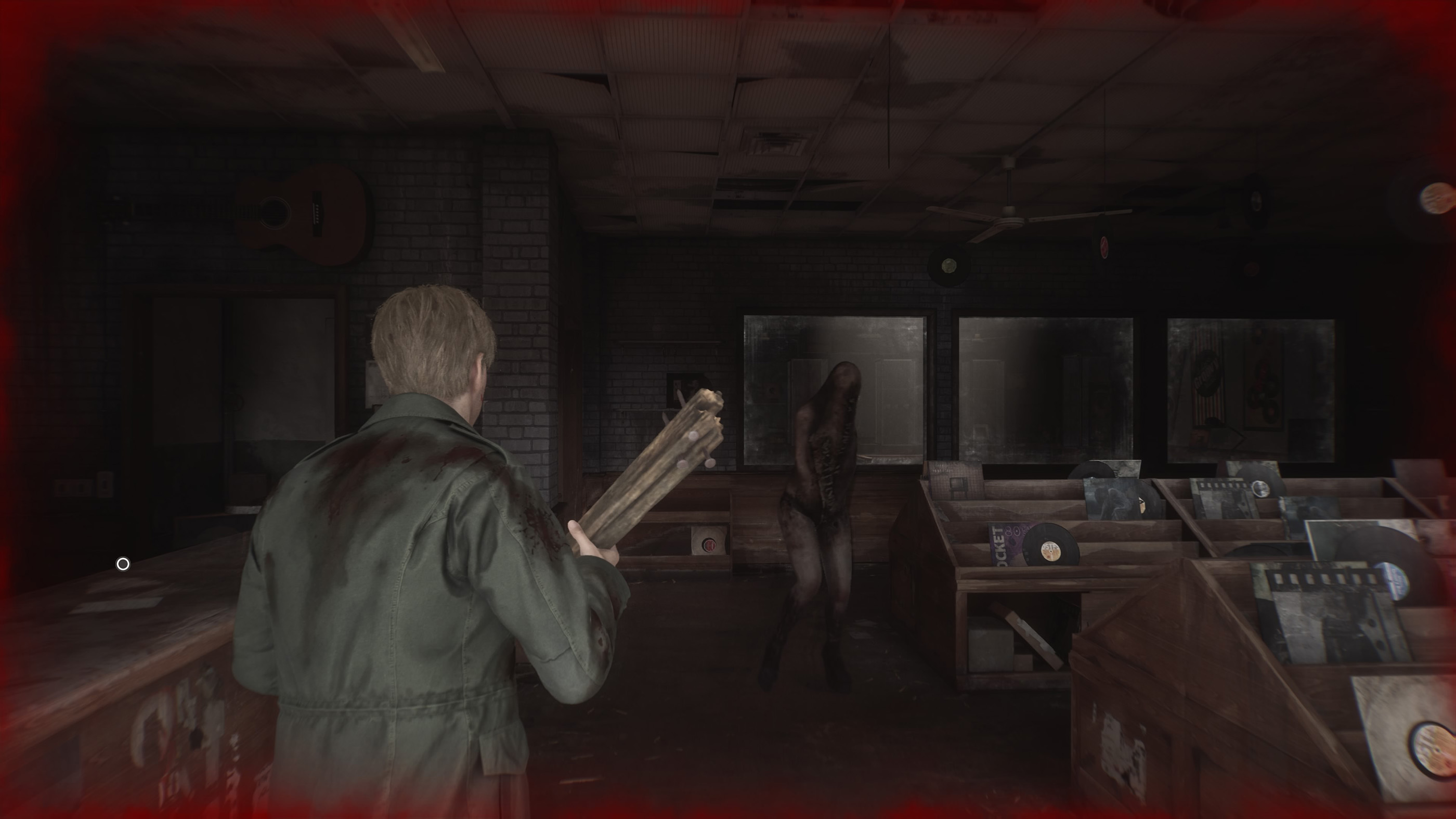
Use Healing according to the Damage
Silent Hill 2 gives you different healing resources, and using the right one preserves flexibility.
Use Smaller Recovery for Manageable Injuries
Saving stronger healing for emergencies gives you a better safety margin before difficult sections.
Do Not Heal after Every Scratch
Taking minor damage does not necessarily justify consuming an item immediately.
Do Not Become Too Stingy Either
Dying with several unused healing items is not efficient resource management. Recover when another hit could realistically put you in serious danger.
Use James's Condition as Information
Visual and interface feedback can help you judge whether it is time to heal.
Pay Attention after a Difficult Fight
Before rushing onward, take a moment to assess health and resources.
Prepare before a Suspiciously Important Area
Large spaces, unusual save opportunities or major transitions are good reasons to check your condition and reload.
Search Every Room Properly
Silent Hill 2 hides supplies in believable environmental locations rather than placing everything directly in the middle of your route.
Sweep the Perimeter
Enter the room and check around the walls before assuming the central object is the only important thing there.
Look at Desks, Cabinets and Small Surfaces
Ammunition and healing items can visually blend into dark interiors.
Move the Camera
The over-the-shoulder perspective means objects behind James or at awkward angles can disappear from view until you turn around.
Use the Flashlight
Lighting the room carefully can reveal supplies that are extremely easy to overlook in darkness.
Let James Help You Search
James's body language can provide useful environmental feedback.
Watch Where He Looks
If his attention shifts toward a nearby object, investigate that side of the room instead of continuing straight ahead.
Do Not Treat It as a Replacement for Searching
You still need to inspect rooms yourself. Use character reactions as another clue rather than an automatic item detector.
Use the Map Constantly
The map is arguably one of your most useful tools.
Check Which Doors You Already Tried
There is little reason to repeatedly walk back to a route that the map already identifies as unusable.
Look for Unexplored Branches
When you are stuck, scan the map for a corridor, room or doorway you never fully investigated.
Compare Floors
A staircase may solve a navigation problem that looks impossible when you only study the current level.
Use the Map after Finding a Key
Instead of trying doors randomly, think about which previously inaccessible area logically matches the new item.
Try Every Door at Least Once
A locked or broken door is still useful information.
Eliminate Dead Ends
The more unusable paths you identify, the smaller the real puzzle becomes.
Do Not Assume Similar Doors Behave the Same Way
Two identical-looking entrances may have completely different states.
Check Again after Progress
Some routes become relevant only after obtaining a key, opening another section or completing an objective.
Read Notes instead of Collecting Them Mechanically
Documents are frequently part of navigation or puzzle logic rather than pure background lore.
Pay Attention to Numbers and Sequences
Anything unusually specific may be more than flavor text.
Notice Repeated Words
A phrase that seems emphasized or oddly written can point toward the intended puzzle logic.
Return to the Note if Necessary
Do not rely on remembering every detail several rooms later.
Inspect Key Items Closely
The dedicated investigation view exists for a reason.
Flip the Object
If the front seems unhelpful, inspect the reverse side before concluding that you are missing another clue.
Zoom In
Look for markings, text and structural details that may explain where the object belongs.
Cycle Related Items
When several investigation objects are available, compare them directly instead of treating each one in isolation.
Do Not Overcomplicate Every Puzzle
Silent Hill puzzles are atmospheric, but the first interpretation of a clue is often more useful than an elaborate theory.
Start Literally
If the clue mentions positions, directions, quantities or objects, test the straightforward relationship first.
Use Everything in the Room
Look at physical layout, inscriptions and interactable components together.
Step Away When You Are Going in Circles
Search another accessible area. You may simply be missing a necessary item rather than misunderstanding the puzzle.
Remember Puzzle Difficulty Changes the Experience
Puzzle and combat difficulty are independent, so you can tune each side of Silent Hill 2 according to what you enjoy.
Choose Harder Puzzles for Less Obvious Guidance
If deciphering clues is a major part of the appeal, a tougher puzzle setting can make discoveries feel more satisfying.
Lower Puzzle Difficulty before Using a Walkthrough
If you would rather solve the puzzle yourself with clearer clues than immediately look up the answer, adjusting the puzzle setting can preserve more of the experience.
Listen to the Environment
Silent Hill 2's soundscape communicates danger as effectively as the visuals.
Use Headphones when Possible
Directional audio can help you understand whether something is moving beside, behind or beyond James.
Do Not Assume Every Noise Is an Immediate Attack
The game deliberately uses sound to make you uncomfortable. Verify the threat before wasting ammunition or fleeing from an empty corridor.
Slow Down when Audio Changes
A sudden shift is a good reason to check the room, camera and escape options.
Manage the Camera during Combat
The over-the-shoulder view improves aiming but can become restrictive when several enemies surround James.
Keep Threats in Front of You
Reposition instead of allowing one monster to remain behind the camera.
Use Quick Turn
R1 or RB is much faster than making a large manual camera rotation when you need to face the opposite direction immediately.
Do Not Fight in Doorframes
Move into a room or back into the corridor rather than allowing the camera and character to become trapped in the doorway.
Use Streets Differently from Interiors
Open areas give you more control over distance and should change how willing you are to fight.
Run around Enemies
A monster in the fog does not always need to be confronted when there is open space on either side.
Save Resources for Confined Locations
The ammunition you preserve outside becomes more valuable when later rooms do not give you the same escape freedom.
Prepare before Boss Encounters
You do not need advance spoilers to recognize the value of basic preparation.
Reload Every Firearm
Do this before the encounter rather than during its opening seconds.
Review Healing
Know which shortcut gives you the recovery you need so you are not opening the inventory in panic.
Keep Moving
Boss spaces often reward maintaining distance and learning the attack rhythm rather than attempting maximum damage immediately.
Use the First Attempt to Learn
Observe attack tells, safe distances and recovery windows instead of treating every missed shot as the main problem.
Save Resources before Major Transitions
If the game clearly signals that you are leaving a large area, consider what you still have available.
Search Unvisited Rooms First
Unused ammunition and healing left behind provide no value after you can no longer return.
Do Not Spend Ammunition Clearing an Area You Are About to Leave
If the exit is already available, preserving supplies is often more useful than eliminating every remaining monster.
Do Not Obsess over Perfect Resource Hoarding
Saving ammunition is useful; refusing to use it when you genuinely need it is not.
Spend Ammo to Prevent Heavy Damage
Several bullets are often cheaper than repeatedly healing after a badly controlled melee encounter.
Use Powerful Weapons when the Situation Justifies Them
An item that remains untouched for the entire game did not help you survive.
Maintain a Reserve, Not a Museum
The goal is to reach dangerous encounters prepared while still making your current journey manageable.
Use Save Opportunities Wisely
Saving regularly protects you from losing exploration progress, resource pickups and successful puzzle solving.
Save after Significant Progress
A completed puzzle, newly opened route or difficult encounter is a natural checkpoint.
Use Multiple Save Slots if You Want Flexibility
Keeping earlier progress can be useful if you later decide you spent too many resources or want to revisit a section.
Common Beginner Mistakes
Fighting Every Monster
You often gain more by preserving ammunition, health and time.
Spamming Melee
Attack briefly, watch the enemy and dodge its response.
Dodging Too Early
React to the committed attack rather than the beginning of every animation.
Forgetting to Reload
Reload once the room becomes safe instead of discovering an empty magazine during the next encounter.
Using Strong Healing for Minor Damage
Match the recovery item to how badly James is actually hurt.
Ignoring the Map
The map reduces wasted backtracking and helps identify routes you never investigated.
Skipping Locked Doors
Trying them gives you information that becomes valuable later.
Failing to Inspect Puzzle Items
Zoom, flip and read before deciding that an object is useless.
Rushing through Dark Rooms
Small ammunition and healing pickups can disappear into the environment.
Using a Guide before Reading the Clue
Many puzzles become manageable once you slow down and interpret the wording carefully.
A Reliable Exploration Routine
- Enter the new area and check the map.
- Try nearby doors to establish which routes are usable.
- Search accessible rooms systematically.
- Use the flashlight and rotate the camera around small surfaces.
- Read every new note carefully.
- Inspect and flip unusual key items.
- Return to the map when you find a key or puzzle component.
- Backtrack only toward routes that can now logically progress.
- Reload and check health before entering another unexplored section.
A Reliable Combat Routine
- Decide whether the enemy actually needs to be fought.
- Create enough space to see its attack clearly.
- Let the enemy begin its committed attack.
- Dodge to a safe angle.
- Counter with a short melee sequence or controlled shot.
- Stop attacking before the enemy's next response.
- Repeat until the route is safe.
- Reload immediately after the encounter.
- Heal only if your remaining health makes the next mistake dangerous.
A Reliable Puzzle Routine
- Read every clue in the immediate area.
- Identify numbers, directions, symbols or unusually specific wording.
- Inspect all collected objects related to the puzzle.
- Flip and zoom them when possible.
- Try the most literal interpretation first.
- Look at the physical arrangement of the puzzle components.
- Check the map for another unexplored room if something is missing.
- Return with additional information instead of brute-forcing indefinitely.
Frequently Asked Questions
Should I kill every enemy in Silent Hill 2?
No. Avoiding enemies is often a sensible way to conserve ammunition and healing, particularly in open areas you do not expect to revisit frequently.
What is the best way to fight with melee weapons?
Wait for the enemy's attack, dodge it, counter briefly and reset rather than continuing a long attack string.
Should I save handgun ammo?
Yes, but not to the point of taking heavy damage unnecessarily. Use ammunition when it makes a dangerous encounter significantly safer.
When should I use the shotgun?
Use its greater stopping power when close-range enemies or difficult encounters justify spending stronger ammunition.
How often should I check the map?
Frequently. Check it after exploring a corridor, obtaining a key, solving a puzzle or becoming unsure which route remains unexplored.
How do I know where to go next?
Review map markings, unread clues, newly obtained key items and doors that may now be accessible.
What should I do if a puzzle makes no sense?
Reread the clue, inspect relevant items and make sure you have fully explored the surrounding rooms before assuming the solution requires guessing.
Can I make puzzles easier without lowering combat difficulty?
Yes. Puzzle difficulty and action/combat difficulty are separate settings.
Can I make combat easier without changing puzzles?
Yes. You can preserve the puzzle challenge while choosing a more forgiving combat setting.
Is it worth using headphones?
Yes. The remake's sound design is a major part of the atmosphere, and directional audio can also improve awareness of nearby threats.
Should I heal immediately after taking damage?
Not necessarily. Judge James's condition and use the appropriate healing item when additional damage would become dangerous.
Should I search areas before leaving them?
Yes. Ammunition, healing and useful notes can be tucked into optional rooms that are easy to miss.
Should I use multiple save slots?
It is useful if you want the option to return to an earlier point after spending too many supplies or if you plan to explore different choices on later runs.
Final Tips
Silent Hill 2 is most rewarding when you resist the urge to rush it. Check doors, study your map, search dark rooms carefully and allow the environment to tell you where progress is still possible. Many moments that initially feel like being lost become straightforward once you review what James has already marked.
Treat combat with the same patience. Dodge first, attack second and never spend ammunition merely because a monster exists. Sometimes the handgun is the correct answer, sometimes melee is cheaper, and sometimes the best strategy is simply to sprint past the threat.
Finally, use the difficulty options to shape the experience you actually want. Combat and puzzle difficulty are independent, so there is no reason to let one side of the game prevent you from enjoying the atmosphere, exploration and story.
See our Silent Hill 2 Controls Guide for the complete PlayStation, Xbox and PC controller reference, including combat, healing, weapon switching, investigation and contextual commands.
Comments
No comments yet. Be the first to share your thoughts!