Firefighting Simulator: Ignite is more than spraying water at flames. Every emergency requires planning, teamwork, proper equipment, and quick decision-making. Charging into a burning building without understanding fire behavior or coordinating with your crew can quickly turn a manageable incident into a disaster.
Whether you're playing solo with AI firefighters or teaming up with friends in co-op, these tips will help you complete missions faster, rescue more civilians, minimize property damage, and become a far more effective firefighter.
Always Size Up the Scene First
Don't rush straight inside a burning building. Take a few seconds to inspect the scene before acting.
- Identify the main fire location.
- Look for multiple entry points.
- Locate trapped civilians.
- Watch for spreading flames.
- Plan your escape route.
A few moments of planning often save several minutes during the mission.
Use the Right Tool for Every Job
Every piece of equipment has a specific purpose. Trying to solve every situation with the fire hose wastes time and resources.
Examples include:
- Fire hoses for large structural fires.
- Fire extinguishers for small localized fires.
- Axes or rescue tools for blocked entrances.
- Ladders for upper-floor rescues.
- Thermal cameras for locating hidden hotspots and victims.
Switch equipment whenever the situation changes instead of forcing one tool to do everything.
Don't Ignore Hidden Hotspots
Visible flames aren't always the biggest threat.
Fire can continue burning behind walls, ceilings, furniture, or debris. Always perform a final sweep using the thermal camera before leaving the scene.
Missing hidden hotspots can allow fires to reignite later during the mission.
Control the Fire Instead of Chasing It
Many new players simply follow flames wherever they spread.
Instead, attack the fire's strongest sections first to stop it spreading into new rooms. Once the fire's growth is under control, extinguishing the remaining flames becomes much easier.
Use Your AI Crew Properly
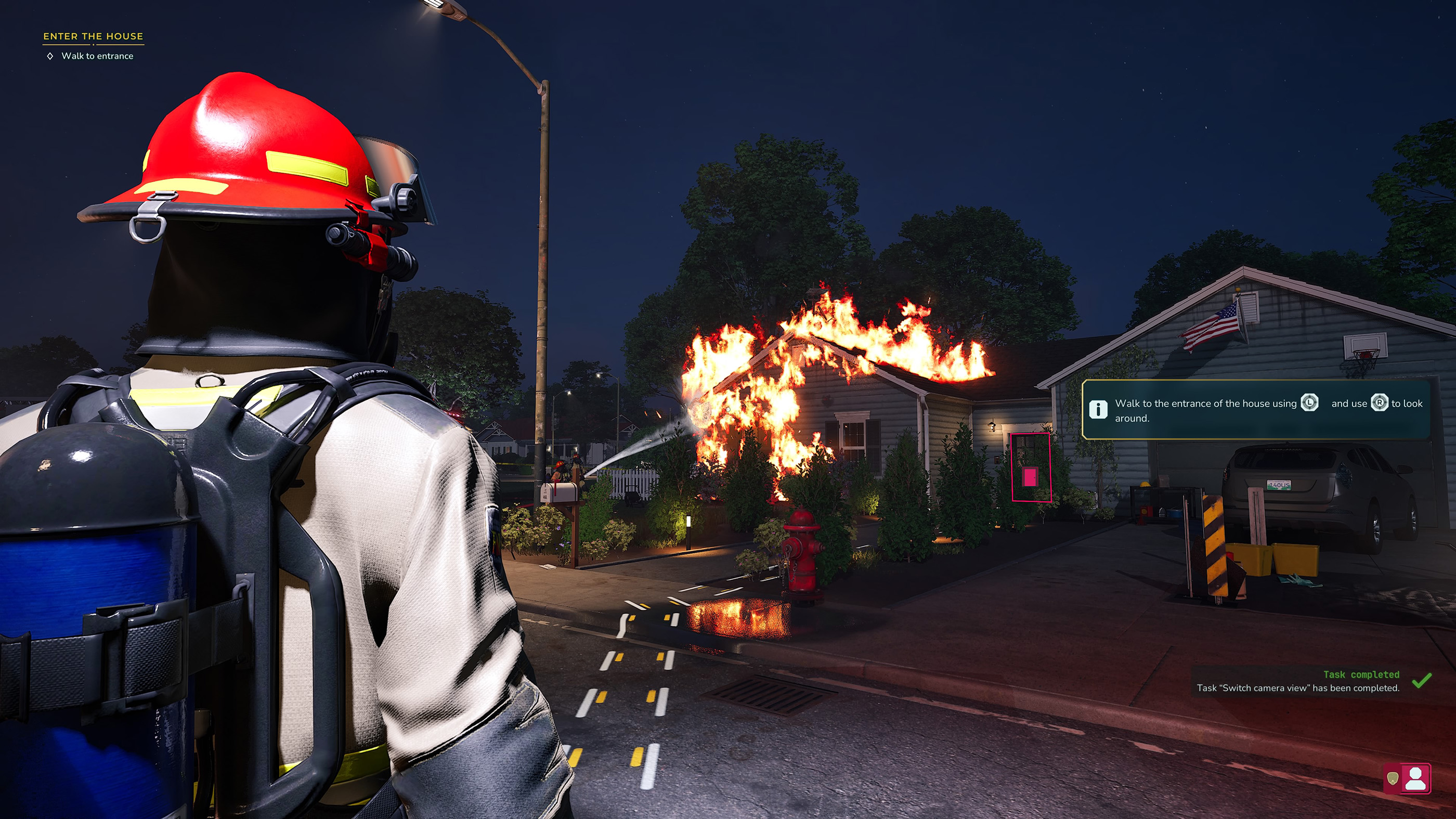
If you're playing solo, your AI teammates are one of your strongest tools.
Don't let them stand idle.
Assign tasks such as:
- Searching for victims.
- Operating additional hoses.
- Carrying equipment.
- Extinguishing separate fire zones.
- Handling rescue operations.
Effective squad management dramatically reduces mission times.
Keep Moving During Large Fires
Standing in one place while spraying water often allows the fire to spread elsewhere.
Stay mobile, reposition frequently, and continuously monitor nearby rooms so new fires don't catch you by surprise.
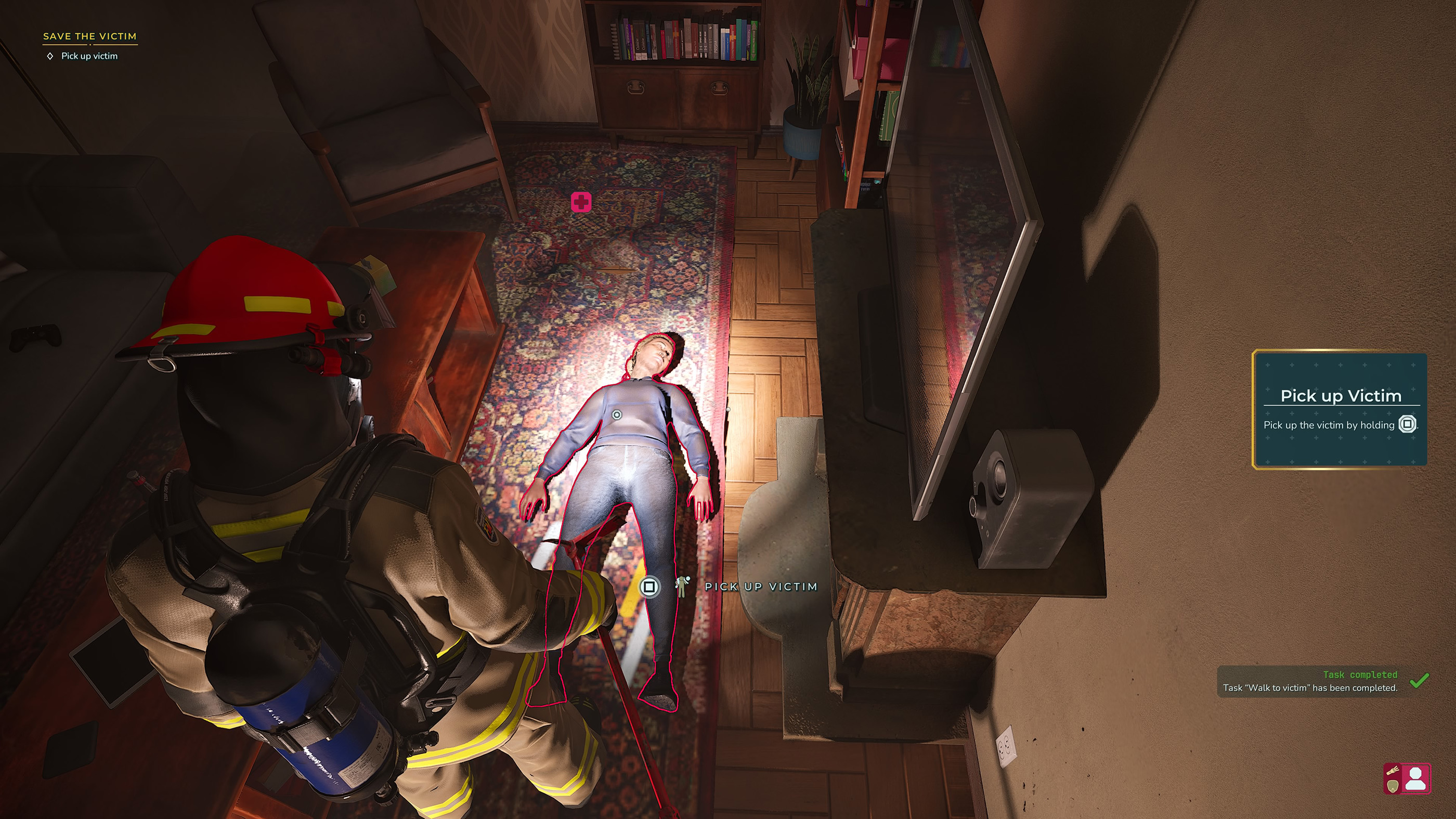
Rescue Victims Early
Saving civilians should almost always be your highest priority.
Once victims are located, clear a safe path and evacuate them before fully extinguishing every flame.
Waiting too long can cause rescue opportunities to disappear.
Watch Your Visibility
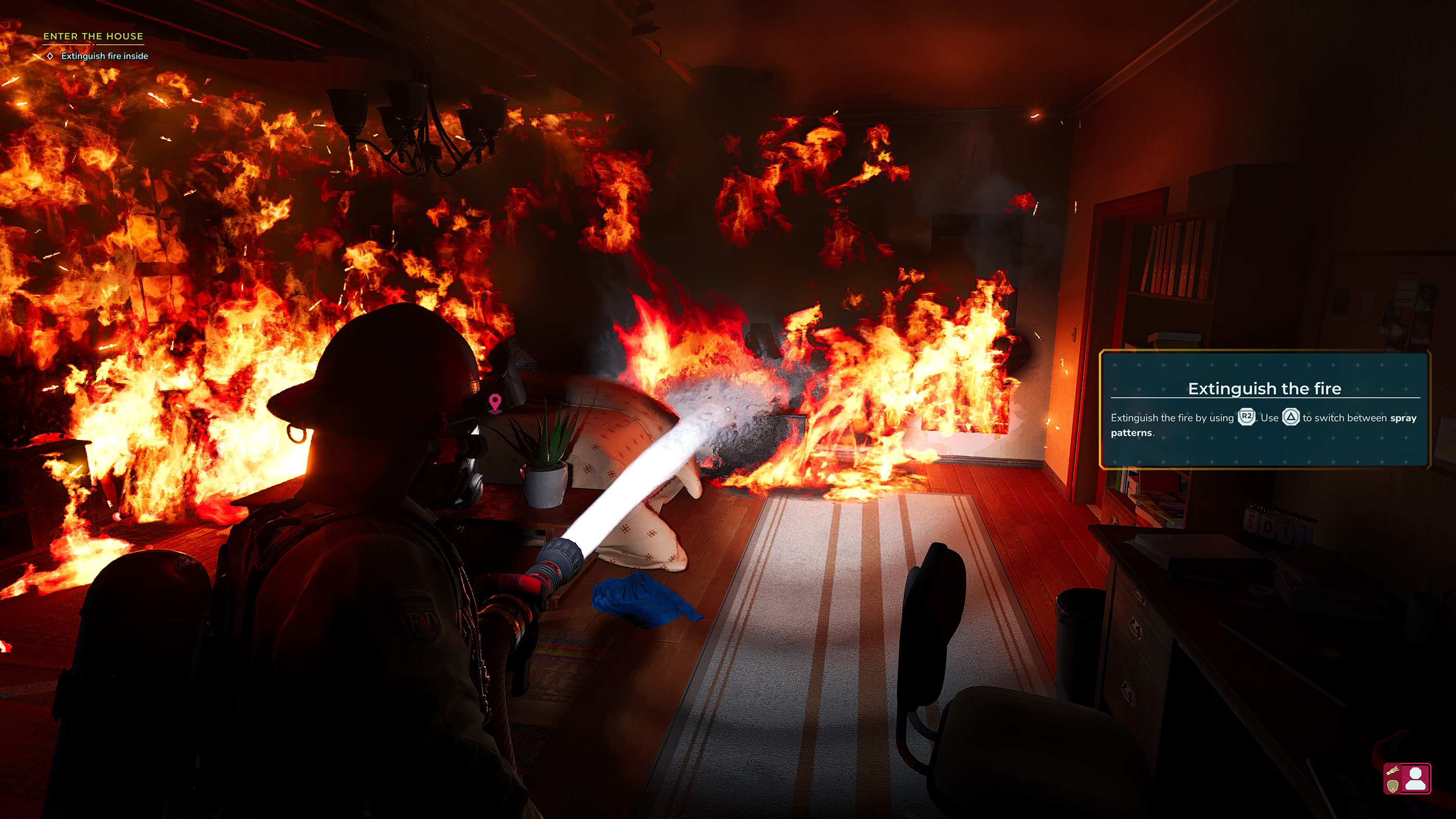
Heavy smoke is often more dangerous than the fire itself.
If visibility becomes poor:
- Use your flashlight.
- Switch to thermal vision.
- Stay low when moving through smoke.
- Avoid running blindly into unfamiliar rooms.
Master Vehicle Positioning
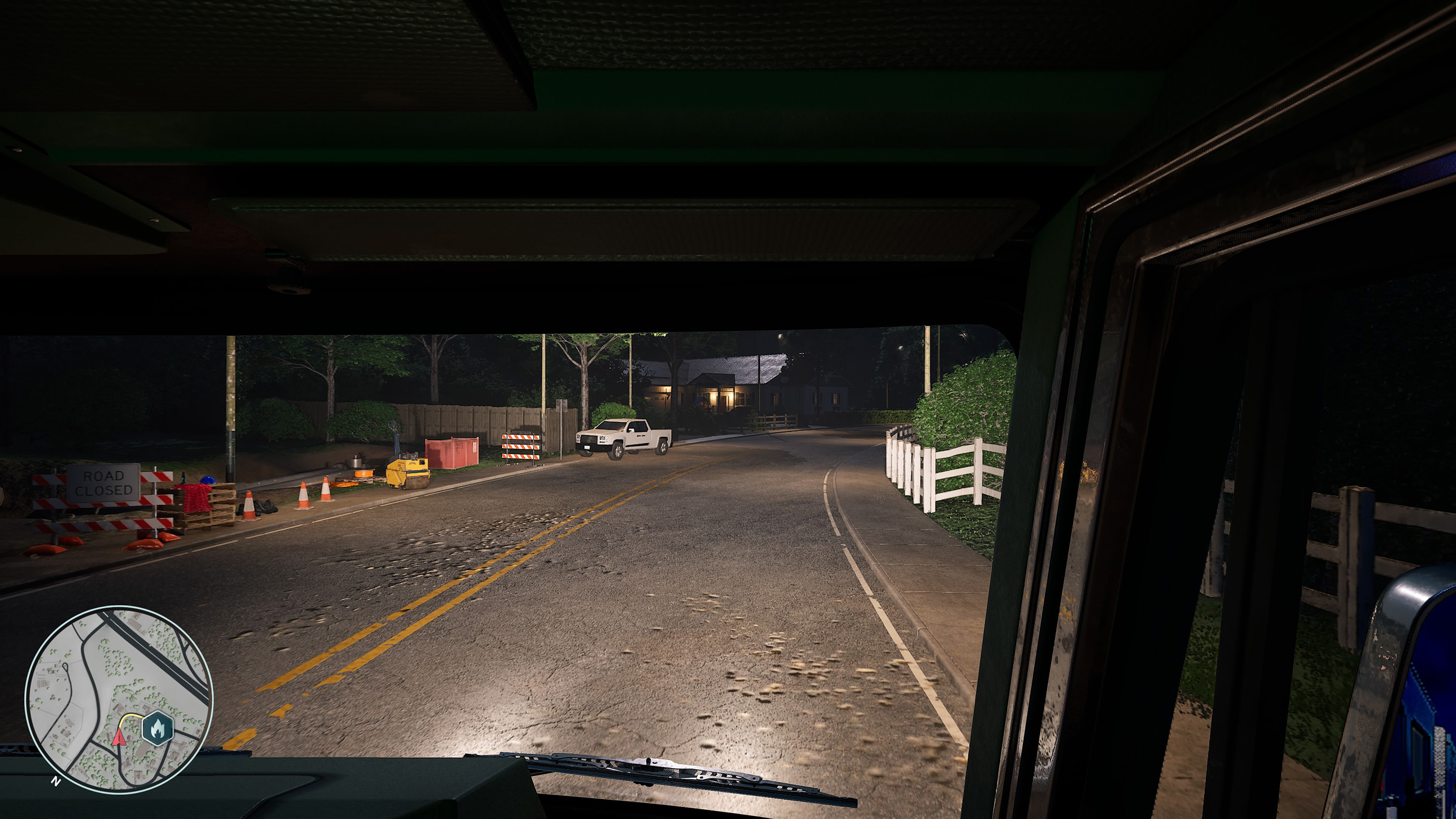
When driving fire engines or specialized vehicles, parking location matters.
Position vehicles where equipment can reach the scene without blocking access routes for teammates.
Poor parking can slow every stage of the operation.
Learn Every Tool's Secondary Function
Many tools offer alternate modes that new players overlook.
Changing spray patterns, adjusting equipment, or using secondary functions often solves problems much faster than repeatedly using the primary action.
Communicate in Co-op
Firefighting Simulator: Ignite rewards teamwork more than individual performance.
If you're playing online:
- Assign each player a responsibility.
- Call out new fire locations.
- Mark trapped civilians.
- Avoid multiple players performing the same task.
- Coordinate rescues before entering dangerous structures.
Don't Waste Time Extinguishing Everything Immediately
Sometimes it's more efficient to isolate dangerous sections first before fully extinguishing the remaining fire.
Preventing fire spread usually saves more time than completely clearing one room while another catches fire.
Practice the Controls Before Hard Missions
Higher difficulty incidents demand quick reactions.
Become comfortable with opening the Command Menu, switching tools, using Thermal View, interacting with objects, and issuing AI orders before tackling larger emergencies.
Comments
No comments yet. Be the first to share your thoughts!