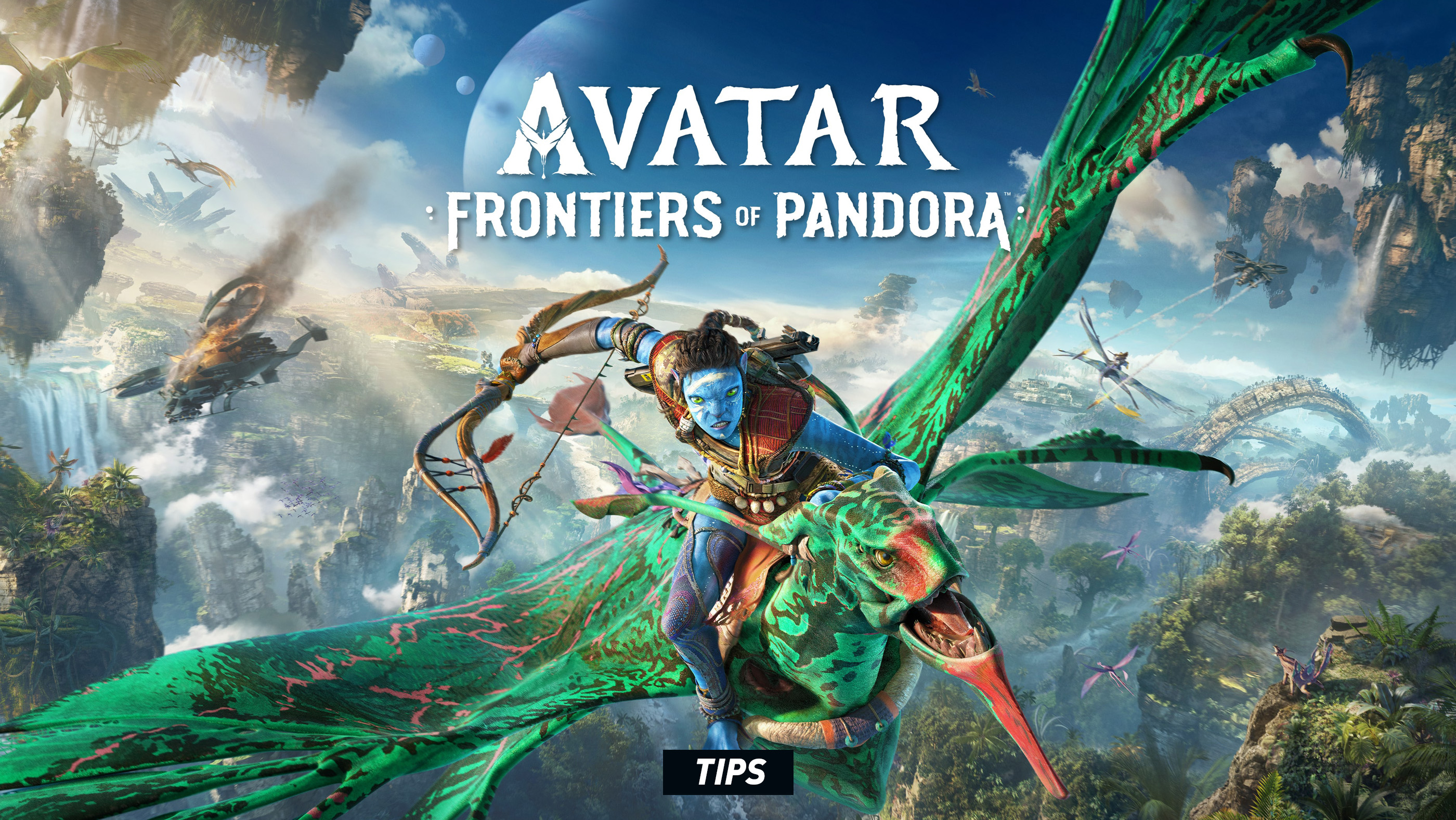
Avatar: Frontiers of Pandora becomes much easier once you stop approaching it as a conventional open-world shooter. Strong firearms can win battles, but the game consistently rewards players who understand Pandora: identify a machine's components, approach wildlife from downwind, gather materials in the right conditions, use food buffs and attack RDA positions from several levels of the environment.
Your equipment is also only as good as its ingredients. A carefully harvested superior or exquisite material can produce a much stronger bow, armguard or waistcloth than a pile of damaged resources. Exploring for quality ingredients is therefore part of character progression rather than an optional crafting distraction.
These spoiler-light tips cover combat, stealth, gathering, clean hunting, crafting, cooking, energy, Na'vi Senses, SID hacking, skill progression, clan contributions, pollution removal, cooperative play, ikran flight and the mistakes that commonly slow new players down.
Essential Avatar: Frontiers of Pandora Tips
- Use Na'vi Senses before entering an unfamiliar area.
- Inspect machines to reveal weak components and armour.
- Target highlighted components instead of firing into the centre mass.
- Move after every shot when fighting the RDA.
- Use bows for stealth and firearms when an alarm is no longer avoidable.
- Destroy or disable alarm systems before attacking a facility.
- Hunt cleanly to preserve the quality of animal materials.
- Do not use explosives on wildlife you intend to harvest.
- Read the Hunter's Guide before searching for a rare ingredient.
- Gather materials during their preferred weather or time conditions.
- Perform the harvesting motion carefully to preserve quality.
- Cook meals that provide a useful buff, not merely energy.
- Keep the energy meter supplied before long missions.
- Craft new equipment whenever better materials become available.
- Complete Tarsyu Saplings and Bellsprigs while exploring.
- Clear RDA pollution to restore the surrounding environment.
- Use SID to prepare several hacks before executing them together.
- Practise diving and climbing with the ikran before aerial combat.
- Land outside enemy facilities rather than directly above them.
- Listen to settlement conversations for activities and world information.
Use Na'vi Senses as a Question, Not a Filter
Na'vi Senses are most helpful when you activate them with a purpose. Ask what you are searching for before pressing R1: an animal trail, a quest character, a resource, an RDA component or a safe route.
Scan in Short Bursts
Activate Senses, identify the relevant highlight and release the command. Leaving the altered display active can hide ordinary visual details and make movement less natural.
Inspect Unfamiliar Targets
Press the inspect command while looking at a highlighted plant, animal or machine. The information can reveal weak points, material quality and useful Hunter's Guide details.
Turn Slowly during a Scan
A fast camera sweep can pass over small objectives before the highlight becomes obvious.
Scan before Entering Water or Dense Plants
Pandora's harmless scenery can include territorial wildlife and reactive flora. A quick check prevents unnecessary damage.
Pin Materials in the Hunter's Guide
Searching the entire map for a plant based only on its name wastes time. Open the Hunter's Guide, read the habitat description and pin the material.
Read the Region and Biome
A resource may exist only in a specific forest type, beside water, high in the canopy or within a named subregion.
Check the Rarer-Quality Description
The guide often explains where superior specimens are most likely to grow.
Follow the Highlight after Reaching the Area
Pinned resources become easier to distinguish with Na'vi Senses, but you still need to search the correct habitat.
Unpin Finished Materials
Keeping too many unrelated resources tracked creates visual clutter.
Gather for Quality, Not Only Quantity
Three factors commonly affect a gathered material: the specimen's inherent quality, the environmental condition and whether the harvesting action was performed correctly.
Inspect before Picking
Do not automatically harvest the first plant you see. A nearby specimen may have a higher quality rating.
Check the Preferred Condition
Rain, dry weather, night or daytime can affect the final material. Gather important ingredients when their condition bonus is active.
Pull in the Correct Direction
Watch the material's resistance and adjust carefully. Jerking it in the wrong direction damages the resource.
Leave Poor Specimens behind
Inventory space and time are more valuable than another low-quality part you will never use.
Gather before Starting a Long Quest
Keep a reserve of ammunition ingredients, healing fruit and commonly used cooking components.
Hunt Cleanly
Animal materials lose value when the creature is killed with excessive damage, inappropriate weapons or repeated hits.
Inspect the Animal First
Na'vi Senses can reveal vulnerable areas and useful material information.
Use the Correct Bow
Match weapon strength to the animal. An underpowered bow may require several damaging hits, while an unnecessarily destructive weapon can ruin the harvest.
Aim for the Weak Point
A clean, merciful kill usually produces better materials than chasing and striking the animal repeatedly.
Do Not Use Grenades or Shotguns
Explosive and indiscriminate damage is suitable for machines, not animals whose parts you intend to craft with.
Stop Chasing a Bad Attempt
If the opening shot wounds the animal and it escapes, continuing to fire wildly often guarantees poor materials. Reset and hunt another specimen cleanly.
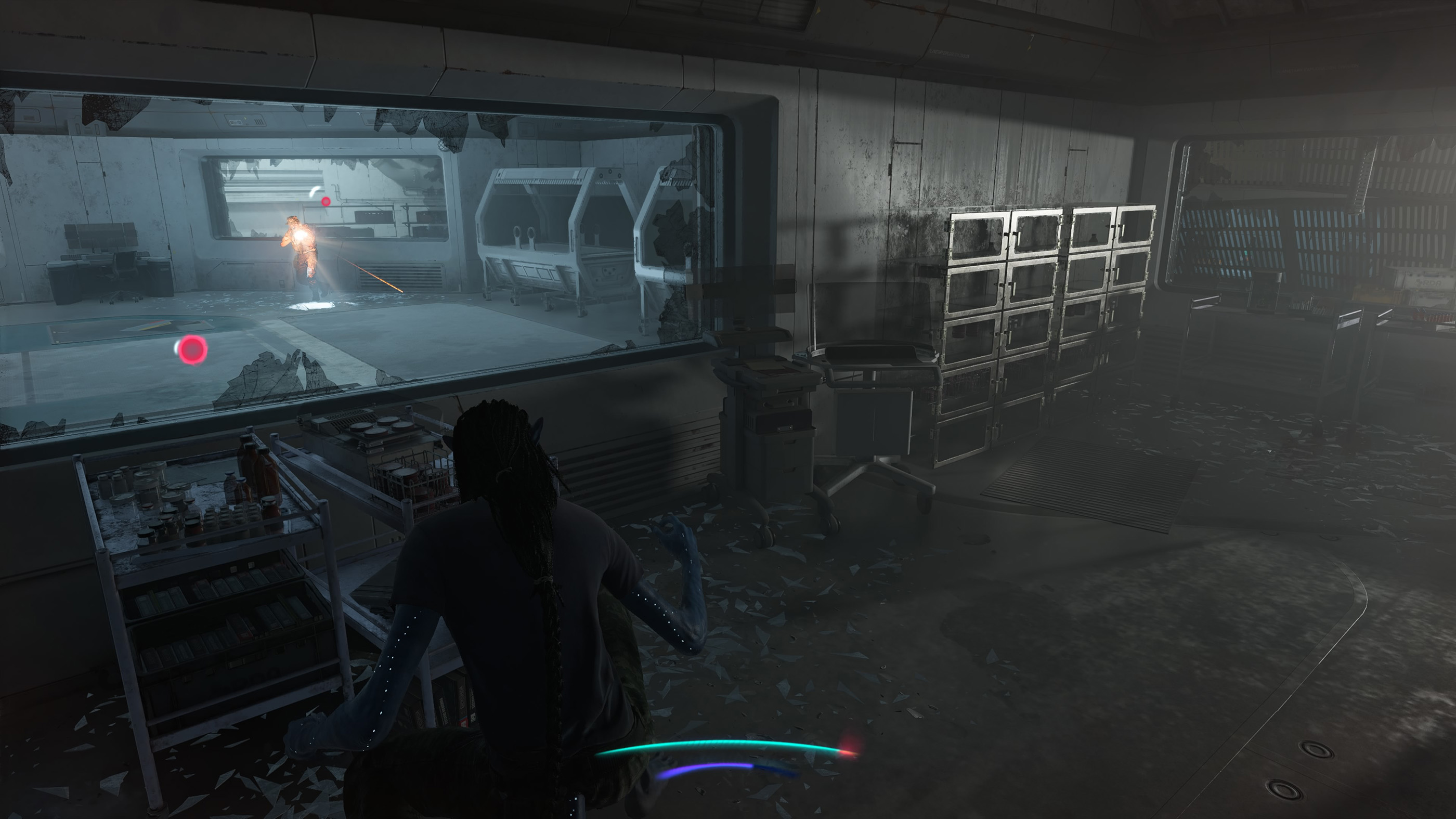
Approach Wildlife Carefully
Not every animal is an enemy, but many defend their territory when startled or approached too closely.
Observe before Moving In
Use Na'vi Senses and watch the animal's posture. Agitated movement and vocalisations warn that it may charge.
Use Terrain as Protection
Trees, rocks and elevated roots can interrupt a large creature's approach.
Do Not Sprint directly behind Prey
Noise and rapid movement make a clean hunting position harder to achieve.
Leave Apex Wildlife Alone Early
A large health bar and intimidating behaviour are signs to return with better skills and equipment.
Target RDA Weak Points
Machines absorb significant damage when attacked carelessly. Inspect them and aim for highlighted components, exposed joints, engines, fuel systems and removable armour.
Break Armour to Reveal Components
Some vulnerable parts cannot be hit cleanly until an exterior plate is removed.
Choose an Angle before Firing
A weak point on the back of a machine is useless when you begin the fight directly in front of it.
Use Heavy Weapons on Heavy Targets
Stronger bows, launchers and specialised ammunition conserve time and resources against armoured machines.
Finish Disabled Machines Quickly
Do not allow a staggered or exposed target to regain its ideal firing position.
Move after Every Shot
The RDA responds aggressively to a known firing position. Even when the first arrow is silent, a surviving enemy may determine where it came from.
Shoot from Multiple Elevations
Move between roots, platforms, roofs and trees rather than circling one piece of ground-level cover.
Break Line of Sight
Crouch behind solid cover and wait for the search state to weaken before attacking again.
Do Not Peek from the Same Side
Enemies continue aiming at the last exposed edge. Leave from the opposite side or change elevation.
Use Pandora as Cover
Large roots, hanging vegetation, cliffs and natural arches are often more useful than the small barriers inside an RDA facility.
Disable Alarms before Starting Open Combat
An otherwise manageable facility becomes much harder when reinforcements arrive.
Locate Alarm Consoles with Na'vi Senses
Scan the entire area from outside the perimeter before attacking.
Use SID when a Direct Approach Is Unsafe
Prepare a hack from cover and execute it when nearby patrols have moved away.
Silence Is More Valuable Than Speed
Taking another minute to remove alarms and isolated guards can save ammunition, healing and several minutes of open fighting.
Watch for More Than One Alarm
Larger positions may contain several devices or enemies capable of raising an alert.
Use the Right Weapon for the Situation
Longbow
Excellent for deliberate, powerful shots and hunting larger targets from range.
Heavy Bow
Useful against armoured machines and targets that demand greater impact.
Shortbow
Suited to rapid movement, close encounters and firing without a long preparation.
Spear-Thrower
Strong against machinery when you have time to aim and understand the projectile path.
Assault Rifle
Reliable once stealth has failed, but noisy and ammunition dependent.
Shotgun
Effective at close range and useful during emergencies inside RDA structures.
Staff Sling
Provides traps and utility that reward planning enemy movement.
Keep a Quiet Option Equipped
Even a firearm-focused loadout benefits from having a bow ready for isolated guards and wildlife.
Charge Bow Shots Deliberately
A rushed bow shot wastes the weapon's primary advantage.
Draw from Cover
Begin charging while hidden, then expose only long enough to release.
Cancel Unsafe Shots
Press the reload or cancel command when the target moves or another enemy enters the line of fire.
Account for Movement
Aim ahead of a moving creature or flying target rather than following its current position.
Do Not Hold Forever
Release once the weapon reaches useful power. Remaining exposed for a perfect shot can be more dangerous than taking a good one.
Use Special Ammunition Selectively
Elemental arrows, specialised rounds and powerful explosives can transform difficult encounters, but their ingredients may be less common.
Save Them for Armoured or Elite Targets
Ordinary soldiers rarely justify rare ammunition.
Exploit Environmental Hazards
Fuel containers and facility machinery may create the same effect without consuming crafted ammunition.
Restock before Entering a Base
Craft what you need while still hidden instead of opening the wheel in the centre of a firefight.
Keep Energy Supplied
Energy is separate from health and influences your ability to recover naturally and remain effective.
Eat before the Meter Is Empty
Waiting until the last moment can leave you without natural recovery during an unexpected encounter.
Carry Cooked Meals
Prepared food restores energy and can provide valuable temporary bonuses.
Use Simple Ingredients for Routine Food
Save rare ingredients for recipes where their quality and bonus meaningfully improve the result.
Check Energy before Fast Travel or Long Flights
Begin major exploration routes prepared rather than searching for food after reaching hostile territory.
Cook for a Purpose
Food can improve stealth, combat, gathering, resistance and other activities.
Prepare Gathering Meals
Use an appropriate buff before travelling specifically to collect rare exquisite materials.
Prepare Combat Meals
Damage, resistance or health-related effects are more valuable before an RDA installation than during casual exploration.
Read Ingredient Order
Primary and secondary ingredients may contribute different effects.
Do Not Waste the Buff
Eat shortly before starting the relevant activity rather than while still several kilometres away.
Craft with Your Best Matching Materials
Crafting strength is influenced by the quality and statistics of the chosen components.
Compare the Preview
Swap ingredients and watch how the resulting damage or protection changes before confirming.
Match Bonuses to Your Playstyle
A high number is useful, but a bonus supporting stealth, wildlife damage or RDA combat may provide more practical value.
Replace Old Designs
New designs can have better potential even before you find perfect ingredients.
Do Not Spend Every Exquisite Material Immediately
Save rare components until you have a design worth keeping for a meaningful portion of the game.
Complete Clan Contributions
Clan Contribution baskets exchange requested equipment, food or materials for favour and other progression benefits.
Check the Request before Selling Materials
A component that seems unnecessary may complete a contribution.
Use Spare Crafted Items
An older piece of equipment can sometimes provide more value as a contribution than as sale inventory.
Increase Clan Favour Regularly
Favour can provide access to useful designs, equipment and materials from clan traders.

Clean RDA Pollution
Destroying RDA installations improves the surrounding environment and helps natural systems recover.
Prioritise Facilities near Resource Areas
Polluted regions can interfere with wildlife and desirable gathering locations.
Approach from Above
Facilities commonly have vents, cables, upper platforms and cliffs that offer better infiltration routes.
Loot before Leaving
Search containers and equipment areas after the position is secure.
Revisit the Restored Area
The region may become more useful for gathering once pollution has been removed.
Complete Bellsprigs and Tarsyu Activities
These natural points of interest contribute directly to character growth.
Bellsprigs
Seek them during ordinary exploration rather than postponing every one until the end of the game.
Tarsyu Saplings
They contribute skill points and support steady ability progression.
Tarsyu Flowers
Major encounters with them unlock powerful Ancestor Skills.
Explore around the Marker
The direct path may be blocked by roots, cliffs or caves. Use Na'vi Senses and look for a natural route.
Choose Skills That Improve Frequent Actions
A skill used during every journey is more valuable than a dramatic ability that appears once every few hours.
Prioritise Movement Early
Parkour, landing and movement improvements make exploration and combat positioning easier throughout the game.
Improve Resource Efficiency
Skills that increase carrying capacity, ammunition or gathering value reduce repeated supply trips.
Add Damage after Establishing Survival
A little more health, healing or mobility often helps more than a specialised damage bonus during the opening hours.
Build around Your Preferred Weapons
Invest in bow, spear, stealth or heavy combat bonuses according to what you actually use.
Use SID as a Planning Tool
SID is most powerful when used before combat, not after every enemy is already firing.
Trace Cables
Follow connected systems to locate terminals, junctions and objectives.
Prepare Several Hacks
Queue available devices and trigger them together when that creates a useful distraction or opening.
Stand behind Solid Cover
Hacking leaves less attention available for enemy movement.
Do Not Execute Too Early
Wait until patrols are positioned where the hack will have the greatest impact.
Learn to Fly through Dives
The ikran travels efficiently by converting altitude into speed and speed back into altitude.
Begin with a Shallow Dive
Point downward long enough to gain momentum without approaching the ground dangerously.
Level Out before Pulling Up
A smooth transition preserves more speed than an abrupt climb.
Flap near the Top of the Climb
Use Cross to add lift as momentum begins to fade.
Repeat in Waves
This creates a natural rhythm that is faster and more satisfying than continuous flapping.
Use Ikran Rolls Late
A defensive roll is most effective after the incoming attack commits to its path.
Watch the Projectile or Aircraft
Do not react only to an early warning sound.
Roll and Change Altitude
Follow the lateral movement with a climb or dive to make the second attack harder to track.
Use Terrain to Break Pursuit
Floating rocks, cliffs and arches can prevent an enemy from maintaining a clean firing line.
Do Not Land in the Middle of a Base
The ikran gives access to high ground, but flying directly over anti-air systems or landing among soldiers removes that advantage.
Land outside the Detection Area
Use a ridge, cliff or forest opening near the facility.
Scout on Foot
Na'vi Senses provide more useful infiltration information once you are close enough to inspect the base.
Keep the Ikran Escape Route Clear
A nearby open ledge makes it easier to leave if the encounter becomes overwhelming.
Explore without Following the Marker Constantly
Pandora is designed around observation. Natural landmarks, streams, floating seeds, sounds and changes in plant life often guide you more effectively than staring at a waypoint.
Use Guided Mode when Needed
There is no penalty for using clearer objective assistance when a location description becomes frustrating.
Try Exploration Mode for Discovery
Reading the quest description and interpreting environmental clues can make travel feel more connected to the world.
Look Up
Many routes continue through branches, vines and canopy platforms rather than across the forest floor.
Listen
Wildlife calls, rushing water, machinery and conversations can reveal points of interest before they are visible.
Listen to Settlement Conversations
Nearby Na'vi may discuss people, locations, wildlife or problems in the region.
Pause near Groups
Running directly through every settlement can cause you to miss useful context.
Check the Map or Quest Log afterward
A newly discovered activity may have appeared without a dramatic notification.
Speak to Characters More Than Once
Dialogue can change after important quests or regional progress.
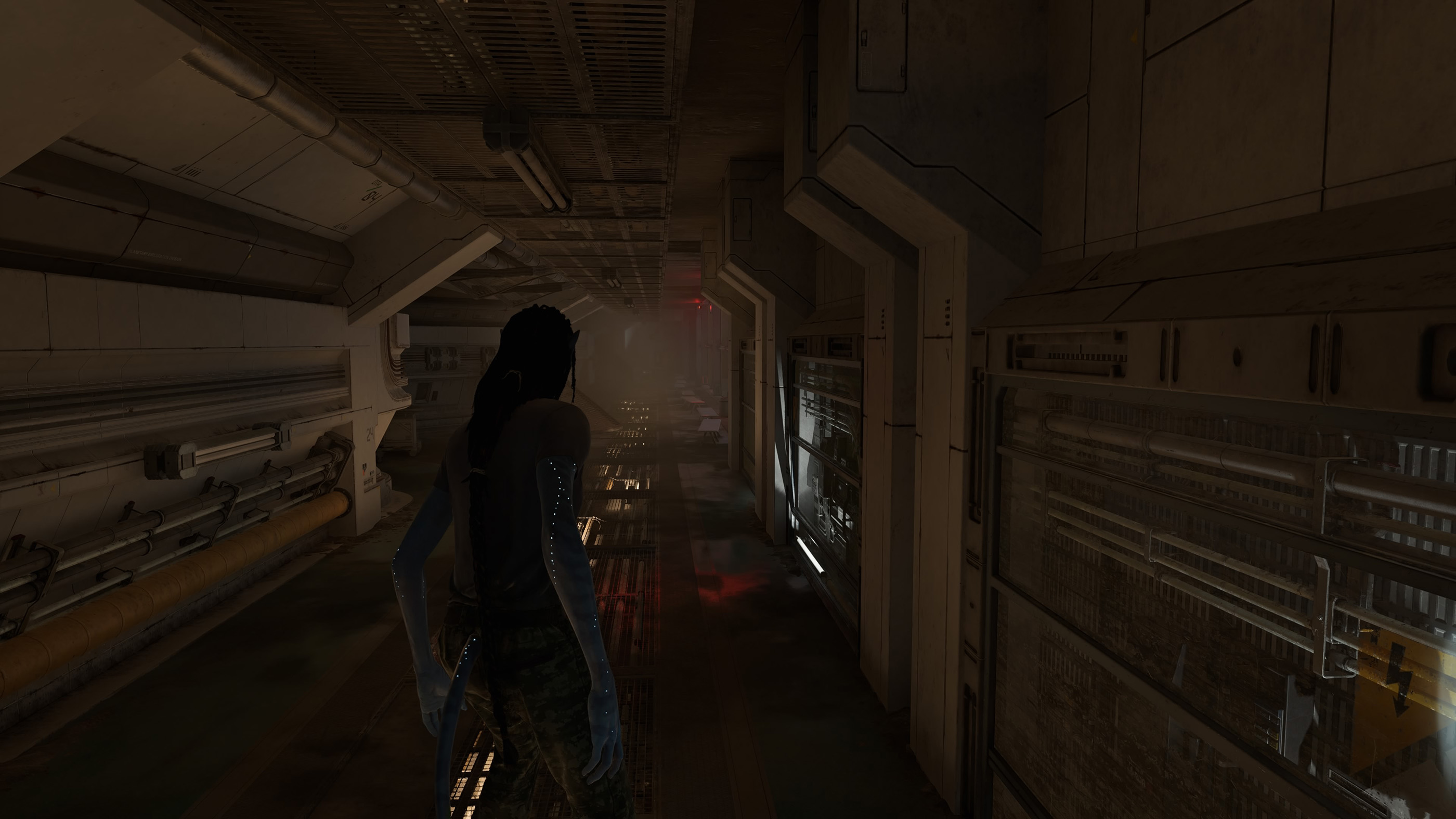
Use Cooperative Play Thoughtfully
Two players can divide roles instead of standing beside each other and firing at the same target.
Attack from Opposite Sides
One player can draw attention while the other targets rear components or disables an alarm.
Share Pings
Mark resources, patrols and objectives rather than relying on vague directions.
Coordinate the First Shot
Simultaneous attacks can remove two guards before either raises an alert.
Wait during Gathering
Give the other player time to inspect and harvest high-quality resources rather than forcing the route forward.
Common Beginner Mistakes
Firing at the Centre of Every Machine
Inspect the target and attack exposed components.
Remaining in One Firing Position
The RDA quickly concentrates fire on the last known location.
Ignoring Facility Alarms
Reinforcements can turn a clean infiltration into a long ammunition drain.
Harvesting Every Specimen Immediately
Inspect nearby options and choose the best-quality material.
Pulling Materials in the Wrong Direction
Careless gathering lowers the final quality.
Using Explosives on Wildlife
Damaged kills produce inferior hunting materials.
Letting Energy Empty
Carry cooked meals and ordinary food before travelling.
Saving Every Good Ingredient Forever
Strong equipment is useful now; craft when a worthwhile design becomes available.
Using Only One Weapon
Carry options for stealth, machinery and close-range emergencies.
Flying by Constantly Flapping
Dive for speed, level out and convert momentum into a climb.
Landing directly inside RDA Bases
Land nearby, scout and begin from a position of control.
Leaving Na'vi Senses Active Continuously
Use short scans with a specific purpose.
Ignoring Food Buffs
A suitable meal can improve gathering, hunting or combat before a demanding activity.
Following the Ground Everywhere
Look for canopy paths, vines, roots and high natural platforms.
A Reliable RDA Facility Routine
- Land or approach outside the detection area.
- Find elevated cover overlooking the facility.
- Use Na'vi Senses to mark soldiers, machines and alarms.
- Inspect heavy machines to identify components.
- Locate a rear, upper or maintenance entrance.
- Disable alarms with stealth or SID.
- Remove isolated soldiers with a bow.
- Attack exposed machine components from cover.
- Move immediately after each shot.
- Use firearms and explosives only when stealth is no longer useful.
- Complete the facility objective.
- Search containers before leaving.
A Reliable Gathering Routine
- Open the Hunter's Guide.
- Read the material's biome and rare-location description.
- Check its preferred weather or time condition.
- Pin the resource.
- Travel to the correct region.
- Use Na'vi Senses to locate specimens.
- Inspect several before harvesting.
- Select the highest-quality specimen.
- Perform the pull in the correct direction.
- Use the material in a worthwhile design or recipe.
A Reliable Hunting Routine
- Inspect the animal from a safe distance.
- Identify the weak point and material quality.
- Choose a weapon appropriate to its size.
- Approach quietly and use cover.
- Wait for a clear angle.
- Fully prepare the shot.
- Aim for a clean, merciful kill.
- Do not use explosives or indiscriminate gunfire.
- Harvest the animal promptly.
A Reliable Ikran Travel Routine
- Call the ikran from an open area.
- Launch from high ground when possible.
- Flap to establish safe altitude.
- Enter a shallow dive to build speed.
- Level out before reaching obstacles.
- Pull into a gradual climb.
- Flap as momentum begins to fade.
- Use free look to check the destination.
- Approach the landing zone at reduced speed.
- Land outside hostile detection areas.
Frequently Asked Questions
What should I upgrade first?
Choose skills that improve movement, survivability and actions you use constantly. Specialise in a weapon category after discovering which one feels natural.
How do I find superior or exquisite materials?
Read the Hunter's Guide, visit the rarer location described there, inspect several specimens and gather during the preferred environmental condition.
Why are my crafted items weak?
The design may be outdated, the components may be low quality or the materials may have been damaged during gathering or hunting.
How do I get a clean kill?
Inspect the animal, use an appropriately powerful bow and hit its vulnerable area with as few shots as possible.
How do I defeat AMP suits?
Inspect them, attack exposed components, remove armour when necessary and keep changing firing positions.
Should I use Na'vi weapons or RDA guns?
Use both. Na'vi weapons support stealth, hunting and component damage, while firearms are useful once concealment has failed.
Why do enemies keep finding me?
You may be firing repeatedly from one position, leaving survivors with line of sight or allowing an alarm to activate.
How do I stop reinforcements?
Locate and disable facility alarms before open combat begins.
What is the best food?
The best meal depends on the activity. Use gathering buffs for material runs, hunting bonuses for wildlife and combat effects before RDA missions.
How do I maintain energy?
Carry raw food and cooked meals, then eat before the meter becomes empty.
How do I fly faster?
Dive to gain momentum, level out and convert the speed into a smooth climb rather than flapping continuously.
How do I avoid attacks while flying?
Roll after the incoming attack commits, then change altitude and use terrain to break the firing line.
Can I play in third person?
Yes. Hold the touchpad on PS5, hold View on Xbox or press J on PC after installing the update that adds third-person mode.
Can I change the controls?
Yes. Individual controller actions can be changed through Settings, Controls and Controller Remapping.
Should I use Guided or Exploration Mode?
Use the mode that keeps exploration enjoyable. Exploration Mode emphasises environmental clues, while Guided Mode provides clearer objective assistance.
What is the most important early habit?
Inspect before acting. Scan machines before shooting, inspect animals before hunting and examine materials before harvesting.
Final Tips
Progress in Avatar: Frontiers of Pandora comes from understanding the world as much as improving statistics. A player carrying ordinary equipment but using the correct weak points, food bonuses and environmental routes can outperform someone with stronger gear who attacks every problem directly.
Gather carefully, hunt cleanly and keep the Hunter's Guide involved in your crafting plans. Against the RDA, disable alarms, attack components and leave every firing position after one or two shots. In the air, use gravity to create speed instead of fighting it with constant wing flaps.
Most importantly, allow yourself to explore without turning every journey into a straight line between map icons. Pandora communicates through sound, wildlife, plant behaviour, conversations and natural landmarks. Paying attention is one of the most powerful tools the game gives you.
See our Avatar: Frontiers of Pandora Controls Guide for the complete ground, combat, gathering, SID, menu and ikran command reference.
Comments
No comments yet. Be the first to share your thoughts!